
Skip to content

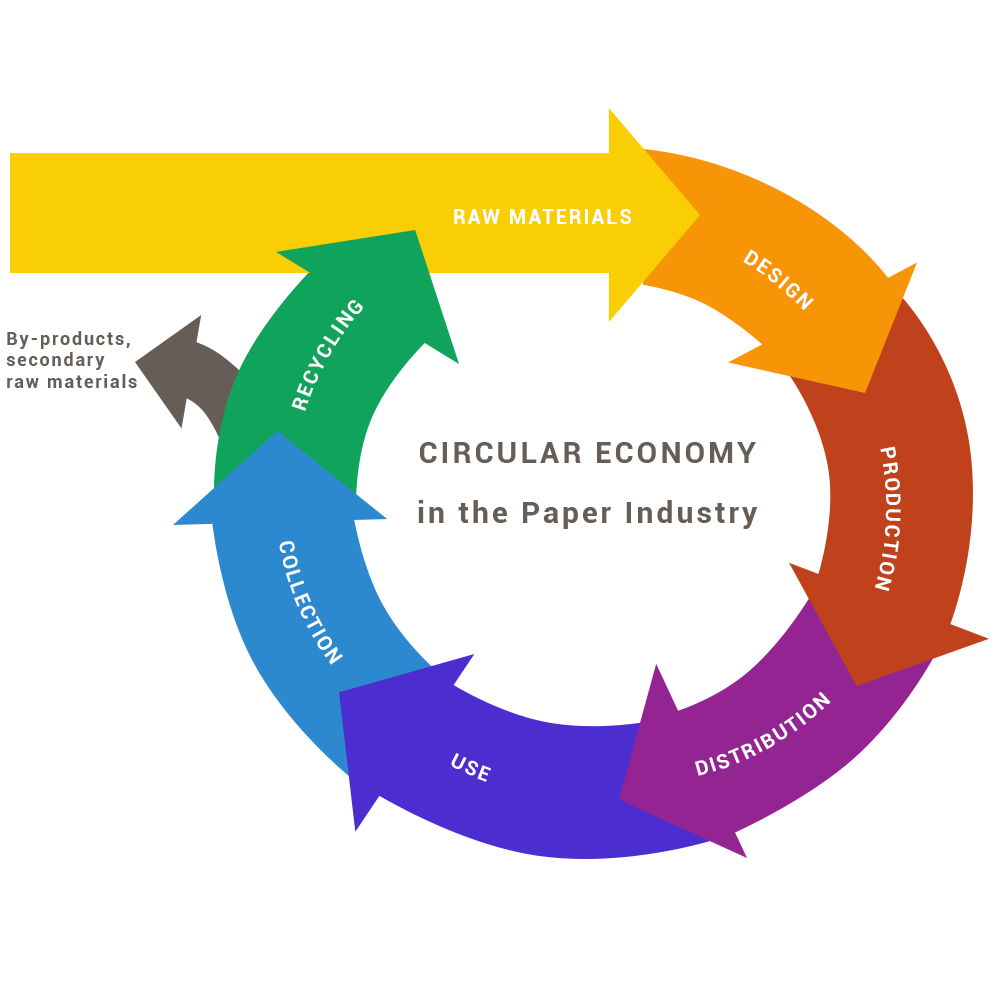
Over the last few years, through systematic work and investment, the paper industry has become a model of sustainable development in the industry. It does not threaten forests, as cellulose fibres are obtained from lower-quality wood or waste wood. For the production of paper and cardboard, cellulose with FSC or PEFC certification is more or less used, which means that it is obtained from a forest that is managed responsibly. The paper industry ranks at the very top of energy-efficient industries, which is also reflected in an improved balance of greenhouse gas emissions. With efficient modern technologies, paper mills have managed to reduce the consumption of water resources despite increased production. Water “borrowed” from nature is returned even cleaner thanks to efficient treatment plants.

Recycling of waste paper and cardboard is beneficial from an ecological point of view, primarily due to the rational use of natural resources. Paper recovery is a demanding process that is not environmentally friendly. The removal of printing inks, which takes place using the deinking process and is an energy- and chemically-intensive process, is particularly problematic. Cellulose fibres can be recycled more than 25 times. Through multiple processing of cellulose fibre, the fibre is damaged, so to maintain the desired physical properties of paper and cardboard, we add a certain proportion of fresh fibres. Recycled fibres cannot be used for the re-production of paper or cardboard of the same quality; instead, we produce a lower quality grade from them than the original. It is necessary to emphasize that even after the end of their useful value, cellulose fibres do not represent a foreign object for the environment and decompose on their own in nature.

At Jamnik, we follow the goals of sustainable development and integrate its values into our operations. We offer sustainable solutions to our customers and also alert them and suggest improvements where possible. We are working intensively on the LCA calculation project, which we will be able to offer to all our customers in the future.

Cardboard PACKAGING MARKS

Care for employees

We reward successful business performance, which we monitor monthly according to four indicators. With greater success, workers’ wages are also correspondingly higher. The company also pays employees an above-average holiday allowance and an annual performance bonus or so-called Christmas bonus.

Health care

For several years now, we have been providing all employees with free fruit at the workplace, thus ensuring a sufficient intake of vitamins. To ensure clean drinking water, we have also installed two water fountains with filtered water and gave all employees a water bottle.

Education

Annually, employees attend several different training sessions. We strive to cover all areas and workplaces. Annually, we dedicate approx. 150 hours to education across approximately 50 training sessions.

Gender equality

We ensure that there are no gender differences at our company. What is more, as many as 67% of management positions are held by women. Within the company, due to the nature of technical work, we employ 60% men and 40% women, where women have equal rights and are paid equally for the same position.

Clean water and sanitation

In 2012, we obtained the ISO 14001 standard, which helps organizations improve their environmental performance through more efficient use of resources and waste reduction.


Clean energy

Some time ago, we installed a 165-kW solar power plant on the company’s roof, which we upgraded in 2023 by an additional 384 kW. With this amount, we cover approximately 50% of all the electricity we need. We purchase the rest of the electricity from natural sources and thus ensure sustainability.

Sustainable economy

Cardboard, which is our primary raw material, is sustainable in itself, but we have decided to use all other raw materials of plant origin as much as possible. Over the years, we have already replaced quite a few chemicals with ones that are non-hazardous to the environment, and we still strive for these changes in the future. In the delivery of raw materials and the shipping of finished products, we ensure that trucks are full and that we combine transports, consequently producing a smaller carbon footprint. We have also calculated the latter and set new ambitious goals for the future.


Decent work and economic growth

By purchasing new and faster machines, we have managed to transition from three shifts to two shifts, which allows workers the necessary night rest. Work, which is otherwise standardized, is not reflected in the salaries of employees as we place greater weight on the quality production we stand behind. With modern technology, we also strive to reduce the amount of physical work and thus care for the health of our employees.


Newsletter Sign-Up

Stay up to date with the latest trends and innovations in the packaging industry.